Category: Design Thinking

What Does 200 Calories Look Like? ᔥWiseGeek

I found this lovely article, which indeed makes a lot of sense, but maybe the real questions are different. Something like:

  • Which Calories are harder to assimilate or make our body to work harder to process them and which just bypass? It is completely different to eat a Melon in the morning before anything than drinking a Sugared Soda, even if both have the same amount of calories.
  • What should we eat to get enough protein and not have that sense of hungriness, that munchy crave? It’s not only to feel full, it is not to feel hungry.

Indeed, we are all worried about how we eat and why we do, any good source of knowledge will feed us in the right way. And still the 5 a day campaign makes a lot of sense. 400 g vegetables and fruit are what the World Health Organization recommends and for the Harvard “Healthy Eating Plate” plate is the best one to follow. http://www.hsph.harvard.edu/nutritionsource/

Here is the article for you to decide.

_____

What Does 200 Calories Look Like?

Written by L. S. Wynn

Some foods have significantly more Calories than others but what makes the difference actually look like. Each of the photographs below represents 200 Calories of the particular type of food; the images are sorted from low to high calorie density. When you consider that an entire plate of broccoli contains the same number of Calories as a small spoonful of peanut butter, you might think twice the next time you decide what to eat. According to the U.S. Department of Agriculture, the average adult needs to consume about 2000 – 2500 Calories to maintain their weight. In other words, you have a fixed amount of Calories to “spend” each day; based on the following pictures, which would you eat?

Pictures of 200 Calories of Various Foods

(After the page loads, you can click on thumbnails for full versions)
200 Calories of Celery
Celery
1425 grams = 200 Calories
200 Calories of Mini Peppers
Mini Peppers
740 grams = 200 Calories
200 Calories of Broccoli
Broccoli
588 grams = 200 Calories
200 Calories of Baby Carrots
Baby Carrots
570 grams = 200 Calories
200 Calories of Honeydew Melon
Honeydew Melon
553 grams = 200 Calories
200 Calories of Coca Cola
Coca Cola
496 ml = 200 Calories
200 Calories of Red Onions
Red Onions
475 grams = 200 Calories
200 Calories of Apples
Apples
385 grams = 200 Calories
200 Calories of Canned Green Peas
Canned Green Peas
357 grams = 200 Calories
200 Calories of Whole Milk
Whole Milk
333 ml = 200 Calories
200 Calories of Kiwi Fruit
Kiwi Fruit
328 grams = 200 Calories
200 Calories of Canned Sweet Corn
Canned Sweet Corn
308 grams = 200 Calories
200 Calories of Grapes
Grapes
290 grams = 200 Calories
200 Calories of Ketchup
Ketchup
226 grams = 200 Calories
200 Calories of Sliced Smoked Turkey
Sliced Smoked Turkey
204 grams = 200 Calories
200 Calories of Balsamic Vinegar
Balsamic Vinegar
200 ml = 200 Calories
200 Calories of Lowfat Strawberry Yogurt
Lowfat Strawberry Yogurt
196 grams = 200 Calories
200 Calories of Canned Chili con Carne
Canned Chili con Carne
189 grams = 200 Calories
200 Calories of Canned Black Beans
Canned Black Beans
186 grams = 200 Calories
200 Calories of Canned Pork and Beans
Canned Pork and Beans
186 grams = 200 Calories
200 Calories of Eggs
Eggs
150 grams = 200 Calories
200 Calories of Cooked Pasta
Cooked Pasta
145 grams = 200 Calories
200 Calories of Avocado
Avocado
125 grams = 200 Calories
200 Calories of Canned Tuna Packed in Oil
Canned Tuna Packed in Oil
102 grams = 200 Calories
200 Calories of Fiber One Cereal
Fiber One Cereal
100 grams = 200 Calories
200 Calories of Flax Bread
Flax Bread
90 grams = 200 Calories
200 Calories of Dried Apricots
Dried Apricots
83 grams = 200 Calories
200 Calories of Jack in the Box Cheeseburger
Jack in the Box Cheeseburger
75 grams = 200 Calories
200 Calories of Jack in the Box French Fries
Jack in the Box French Fries
73 grams = 200 Calories
200 Calories of Jack in the Box Chicken Sandwich
Jack in the Box Chicken Sandwich
72 grams = 200 Calories
200 Calories of French Sandwich Roll
French Sandwich Roll
72 grams = 200 Calories
200 Calories of Blueberry Muffin
Blueberry Muffin
72 grams = 200 Calories
200 Calories of Sesame Seed Bagel
Sesame Seed Bagel
70 grams = 200 Calories
200 Calories of Tootsie Pops
Tootsie Pops
68 grams = 200 Calories
200 Calories of Hot Dogs
Hot Dogs
66 grams = 200 Calories
200 Calories of Wheat Dinner Rolls
Wheat Dinner Rolls
66 grams = 200 Calories
200 Calories of Corn Bran Cereal
Corn Bran Cereal
60 grams = 200 Calories
200 Calories of Bailey's Irish Cream
Bailey’s Irish Cream
60 ml = 200 Calories
200 Calories of Smarties Candy
Smarties Candy
57 grams = 200 Calories
200 Calories of Uncooked Pasta
Uncooked Pasta
56 grams = 200 Calories
200 Calories of Blackberry Pie
Blackberry Pie
56 grams = 200 Calories
200 Calories of Cranberry Vanilla Crunch Cereal
Cranberry Vanilla Crunch Cereal
55 grams = 200 Calories
200 Calories of Cornmeal
Cornmeal
55 grams = 200 Calories
200 Calories of Wheat Flour
Wheat Flour
55 grams = 200 Calories
200 Calories of Peanut Butter Power Bar
Peanut Butter Power Bar
54 grams = 200 Calories
200 Calories of Puffed Rice Cereal
Puffed Rice Cereal
54 grams = 200 Calories
200 Calories of Jelly Belly Jelly Beans
Jelly Belly Jelly Beans
54 grams = 200 Calories
200 Calories of Puffed Wheat Cereal
Puffed Wheat Cereal
53 grams = 200 Calories
200 Calories of Brown Sugar
Brown Sugar
53 grams = 200 Calories
200 Calories of Glazed Doughnut
Glazed Doughnut
52 grams = 200 Calories
200 Calories of Salted Pretzels
Salted Pretzels
52 grams = 200 Calories
200 Calories of Medium Cheddar Cheese
Medium Cheddar Cheese
51 grams = 200 Calories
200 Calories of Fruit Loops Cereal
Fruit Loops Cereal
51 grams = 200 Calories
200 Calories of Gummy Bears
Gummy Bears
51 grams = 200 Calories
200 Calories of Splenda Artifical Sweetener
Splenda Artifical Sweetener
50 grams = 200 Calories
200 Calories of Salted Saltines Crackers
Salted Saltines Crackers
50 grams = 200 Calories
200 Calories of Werther's Originals Candy
Werther’s Originals Candy
50 grams = 200 Calories
200 Calories (69% of one serving) of Snickers Chocolate Bar
Snickers Chocolate Bar
41 grams = 200 Calories
200 Calories of Doritos
Doritos
41 grams = 200 Calories
200 Calories of Marshmallow Treat
Marshmallow Treat
40 grams = 200 Calories
200 Calories of M&M Candy
M&M Candy
40 grams = 200 Calories
200 Calories of Peanut Butter Crackers
Peanut Butter Crackers
39 grams = 200 Calories
200 Calories of Cheetos
Cheetos
38 grams = 200 Calories
200 Calories of Potato Chips
Potato Chips
37 grams = 200 Calories
200 Calories of Hershey Kisses
Hershey Kisses
36 grams = 200 Calories
200 Calories of Sliced and Toasted Almonds
Sliced and Toasted Almonds
35 grams = 200 Calories
200 Calories of Fried Bacon
Fried Bacon
34 grams = 200 Calories
200 Calories of Peanut Butter
Peanut Butter
34 grams = 200 Calories
200 Calories of Salted Mixed Nuts
Salted Mixed Nuts
33 grams = 200 Calories
200 Calories of Butter
Butter
28 grams = 200 Calories
200 Calories of Canola Oil
Canola Oil
23 grams = 200 Calories

Answers to some questions and other notes:

Why 200 Calories? We could have chosen any amount of Calories for this project, but we wanted something that gave tangible volumes for the entire range of items. We felt that 100 Calories of butter or oil would have yielded diminutive portion sizes; on the other hand 500 Calories of celery would have been virtually incomprehensible.

How did you choose which foods to include in the project? Many of the items we chose just happened to be in the wiseGEEK pantry; we chose the others because we wanted to display foods in a wide variety of categories. We stayed away from prepared foods such as funnel cake and spanakopitabecause their Caloric content is closely tied to the particular recipe used; we also avoided some more obscure foods such as mangosteen and jackfruit.

The sorting can be misleading because items with liquid tend to appear less Calorie dense; that’s why you will find coke amongst the vegetables and cooked pasta significantly higher than uncooked pasta.

All pictures were taken with the same camera (Nikon D70 digital camera) and with the same setup; in other words, the portion sizes displayed are all relative to each other.

The plate is 10.25″ (26cm) in diameter and the bowl is 6.25″ (16cm)

This article deals with Calories only. Don’t forget that there are other considerations when choosing which foods to eat, such as nutritive value and diversity of your food choices.

The capital “C” in “Calories” throughout this article denotes dietary as opposed to physics calories.

Written by L. S. Wynn

Link to original article: http://www.wisegeek.com/what-does-200-calories-look-like.htm

Also from the article at FastCohttp://www.fastcoexist.com/3025369/this-is-what-200-calories-looks-like?partner=newsletter#31

Esta semana en el Panorama Retail ᔥILACAD

México

– Las ventas de Walmex crecen pero las aperturas caen en 2014   
– Súper del Norte inauguró una nueva tienda y alcanzó las 46 en México   
– La cadena Súper del Norte cerró el 2013 con 42 tiendas
– La cadena Súper Gutierrez concluyó el 2013 con 15 tiendas
– La cadena Súper Kompras cerró el 2013 con 26 tiendas
– La red San Francisco de Asís cerró el 2013 con 46 tiendas
– Supermercados Santa Fe concluyó el 2013 con 86 tiendas
– El Grupo Zorro Abarrotero cerró el 2013 con casi 50 tiendas

Aquí el vínculo al artículo completo:

http://www.ilacadworldretail.com/nota.aspx?nota=21763&pagina=1

Como hacer una gráfica en illustrator

Como hacer una gráfica en illustrator

norismo's avatarInfoGUAM

How to Make a Graph in Adobe Illustrator

 
By NATHAN YAU

Done graph

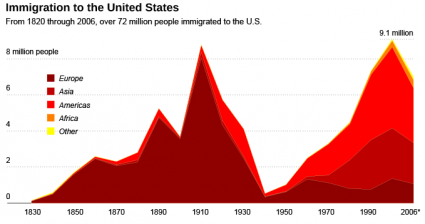
You can use the vector-based software normally reserved for designers and artists to make and edit charts.


Most of us create graphs with actual graphing software. Maybe it’s Microsoft Excel. Maybe it’sR. Whatever it is though it’s usually specialized for analysis. What if you want to make a graphic for a publication or a presentation that’s polished and fully customized? Adobe Illustrator gives you the control you need to do this. It’s not graphing software. It’s illustration software, but once you get the hang of things, Adobe Illustrator can be a valuable tool in your visualization arsenal.

In the rest of this post, I’ll go over the steps to make the above graph in Illustrator. I used the U.S. immigration data from our recent contest.

View original post 735 more words

Google Ventures On 8 Shortcuts For Better, Faster Design Research. Via: http://www.fastcodesign.com

GOOGLE VENTURES’S MICHAEL MARGOLIS IS MORE PRODUCTIVE THAN EVER. HIS SECRET? SHORTCUTS.

One thing is certain: I’m more productive now than when I first started. I’m not any smarter (just ask my co-workers). I’m not working more hours. So what’s my secret? Shortcuts. In the interest of helping you do more faster (and to compel you to share your own tricks), here are my favorite ways to cut corners, save time, and be more efficient when doing research.

1. Start at the end: What questions do you want to answer? 
Before you do any work on a research study, clarify what you want to get out of it. For example, would it be most useful to figure out:

  • Can new customers understand and figure out how to use the product?
  • What are customers’ existing workflow and pain points?
  • What are pros/cons of competitive products?
  • What are customers’ attitudes?
  • How satisfied are existing customers with the product?
  • How does new customers’ usage change over time?
  • Which design performs better?

When you know which answers you’re after, it’s quicker to choose the most efficient way to find them–by picking an appropriate research method (survey, A/B test, literature review, usability interviews, site visits, etc.), and the right segment of customers to study.

2. Get feedback from customers early and often
Even if your product’s trajectory is off by a little, you could miss your target by a lot. It’s always easier to correct course earlier before you’ve strayed too far. Try a design sprint. Or just try these tips to learn more from your conversations with your users.

3. Check whether someone else has already done your research for you
Whether you’re curious about how teens use mobile video, or trying to decide whether to rely on keyboard shortcuts, use these tips for lean market research to dig up the results from someone else’s hard work and expertise.

4. Don’t read the (whole) book
For many business books, you can get the main points without reading the whole book. Search the web for a summary, review, or talk by the author (on YouTube or TED). Try Googling “summary of [book title].” Plenty of free and paid sites offer summaries of business books, including getabstract.comsummaries.com, and squeezedbooks.com.

5. Make re-usable templates
To reduce time it takes to recruit research participants, use templates for recruiting questionnaires and various confirmation emails. (Check out the worksheets and templates that accompany the video of theresearch workshop I’ve taught to GV portfolio companies.)

6. Create (and use!) good checklists
See this summary of The Checklist Manifesto or watch this five-videominute summary of Gawande’s book. Effective checklists have specific tasks with time estimates. Here’s my checklist for planning a scrappy round of usability interviews.

7. Assemble your kit (and keep your bag packed)
Gather everything you need to conduct customer interviews so you won’t waste time tracking things down before every study. I keep a small tote and camera bag ready to go with:

  • Audio recorder (and/or Livescribe pen)
  • Extra batteries
  • Notepad and pens
  • Webcam
  • USB hub
  • Mouse
  • Keyboard
  • Ziggi USB document camera
  • Adapter for plugging my laptop into a larger monitor
  • Video camera
  • Watch or small digital clock
  • Breath mints

I don’t use all of these things for every interview (except the mints!), but organizing it beforehand saves me a lot of time and frustration.

8. Compress interviews into one day
Try to schedule interviews and field visits as close together as possible. (For example, I regularly conduct five 60-minute interviews in one day.) This may not sound like a shortcut, but it actually helps avoid hours of reviewing notes and videos to figure out and communicate research findings–after several interviews in a row, the patterns and findings are usually pretty obvious. And because teams are more likely to watch interviews batched in a single day, you won’t need to spend time explaining (or arguing about) the results. You can always create a written summary or more detailed analysis if necessary.

I hope these shortcuts help you get better research results with less effort. What shortcuts do you take? Tweet me at @GVDesignTeam or@mmargolis.

Corporate Acquisitions of Startups: Why Do They Fail?

Steve Blank’s guidance is a must for any entrepreneurial or startup person. A must.

steve blank's avatarSteve Blank

For decades large companies have gone shopping in Silicon Valley for startups. Lately the pressure of continuous disruption has forced them to step up the pace.

More often than not the results of these acquisitions are disappointing.

What can companies learn from others’ failed efforts to integrate startups into large companies? The answer – there are two types of integration strategies, and they depend on where the startup is in its lifecycle.

The Innovation Portfolio
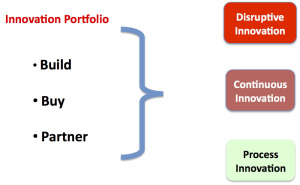
Most large companies manage three types of innovation: process innovation (making existing products incrementally better), continuous innovation (building on the strength of the company’s current business model but creating new elements) and disruptive innovation (creating products or services that did not exist before.)

Companies manage these three types of innovation with an innovation portfolio – they build innovation internally, they buy it or they partner with resources outside their company.

innovation portfolioFive Types of Innovation to Buy
If they decide to buy…

View original post 1,123 more words

An incomplete manifesto for growth. Via Bruce Mau

1. Allow events to change you. You have to be willing to grow. Growth is different from something that happens to you. You produce it. You live it. The prerequisites for growth: the openness to experience events and the willingness to be changed by them.

2. Forget about good. Good is a known quantity. Good is what we all agree on. Growth is not necessarily good. Growth is an exploration of unlit recesses that may or may not yield to our research. As long as you stick to good you’ll never have real growth.

3. Process is more important than outcome. When the outcome drives the process we will only ever go to where we’ve already been. If process drives outcome we may not know where we’re going, but we will know we want to be there.

4. Love your experiments (as you would an ugly child). Joy is the engine of growth. Exploit the liberty in casting your work as

beautiful experiments, iterations, attempts, trials, and errors. Take the long view and allow yourself the fun of failure every day.

5. Go deep. The deeper you go the more likely you will discover something of value.

6. Capture accidents. The wrong answer is the right answer in search of a different question. Collect wrong answers as part of the process. Ask different questions.

7. Study. A studio is a place of study. Use the necessity of production as an excuse to study. Everyone will benefit.

8. Drift. Allow yourself to wander aimlessly. Explore adjacencies. Lack judgment. Postpone criticism.

9. Begin anywhere. John Cage tells us that not knowing where to begin is a common form of paralysis. His advice: begin anywhere.

10. Everyone is a leader. Growth happens. Whenever it does, allow it to emerge. Learn to follow when it makes sense. Let anyone lead.

11. Harvest ideas. Edit applications. Ideas need a dynamic, fluid, generous environment to sustain life. Applications, on the other hand, benefit from critical rigor. Produce a high ratio of ideas to applications.

12. Keep moving. The market and its operations have a tendency to reinforce success. Resist it. Allow failure and migration to be part of your

practice.

13. Slow down. Desynchronize from standard time frames and surprising opportunities may present themselves.

14. Don’t be cool. Cool is conservative fear dressed in black. Free yourself from limits of this sort.

15. Ask stupid questions. Growth is fueled by desire and innocence. Assess the answer, not the question. Imagine learning throughout your life at the rate of an infant.

16. Collaborate. The space between people working together is filled with conflict, friction, strife, exhilaration, delight, and vast creative potential.

17. ——————————. Intentionally left blank. Allow space for the ideas you haven’t had yet, and for the ideas of others.

18. Stay up late. Strange things happen when you’ve gone too far, been up too long, worked too hard, and you’re separated from the rest of the world.

19. Work the metaphor. Every object has the capacity to stand for something other than what is apparent. Work on what it stands for.

20. Be careful to take risks. Time is genetic. Today is the child of yesterday and the parent of tomorrow. The work you produce today will create your future.

21. Repeat yourself. If you like it, do it again. If you don’t like it, do it again.

22. Make your own tools. Hybridize your tools in order to build unique things. Even simple tools that are your own can yield entirely new avenues of exploration. Remember, tools amplify our capacities, so even a small tool can make a big difference.

23. Stand on someone’s shoulders. You can travel farther carried on the accomplishments of those who came before you. And the view is so much better.

24. Avoid software. The problem with software is that everyone has it.

25. Don’t clean your desk. You might find something in the morning that you can’t see tonight.

26. Don’t enter awards competitions. Just don’t. It’s not good for you.

27. Read only left-hand pages. Marshall McLuhan did this. By decreasing the amount of information, we leave room for what he called our “noodle.”

28. Make new words. Expand the lexicon. The new conditions demand a new way of thinking. The thinking demands new forms of expression. The expression generates new conditions.

29. Think with your mind. Forget technology. Creativity is not device-dependent.

30. Organization = Liberty. Real innovation in design, or any other field, happens in context. That context is usually some form of cooperatively managed enterprise. Frank Gehry, for instance, is only able to realize Bilbao because his studio can deliver it on budget. The myth of a split between “creatives” and “suits” is what Leonard Cohen calls a ‘charming artifact of the past.’

31. Don’t borrow money. Once again, Frank Gehry’s advice. By maintaining financial control, we maintain creative control. It’s not exactly rocket science, but it’s surprising how hard it is to maintain this discipline, and how many have failed.

32. Listen carefully. Every collaborator who enters our orbit brings with him or her a world more strange and complex than any we could ever hope to imagine. By listening to the details and the subtlety of their needs, desires, or ambitions, we fold their world onto our own. Neither party will ever be the same.

33. Take field trips. The bandwidth of the world is greater than that of your TV set, or the Internet, or even a totally immersive, interactive, dynamically rendered, object-oriented, real-time, computer graphic– simulated environment.

34. Make mistakes faster. This isn’t my idea — I borrowed it. I think it belongs to Andy Grove.

35. Imitate. Don’t be shy about it. Try to get as close as you can. You’ll never get all the way, and the separation might be truly remarkable. We have only to look to Richard Hamilton and his version of Marcel Duchamp’s large glass to see how rich, discredited, and underused imitation is as a technique.

36. Scat. When you forget the words, do what Ella did: make up something else … but not words.

37. Break it, stretch it, bend it, crush it, crack it, fold it.

38. Explore the other edge. Great liberty exists when we avoid trying to run with the technological pack. We can’t find the leading edge because it’s trampled underfoot. Try using old-tech equipment made obsolete by an economic cycle but still rich with potential.

39. Coffee breaks, cab rides, green rooms. Real growth often happens outside of where we intend it to, in the interstitial spaces — what Dr. Seuss calls “the waiting place.” Hans Ulrich Obrist once organized a science and art conference with all of the infrastructure of a conference — the parties, chats, lunches, airport arrivals — but with no actual conference. Apparently it was hugely successful and spawned many ongoing collaborations.

40. Avoid fields. Jump fences. Disciplinary boundaries and regulatory regimes are attempts to control the wilding of creative life. They are often understandable efforts to order what are manifold, complex, evolutionary processes. Our job is to jump the fences and cross the fields.

41. Laugh. People visiting the studio often comment on how much we laugh. Since I’ve become aware of this, I use it as a barometer of how comfortably we are expressing ourselves.

42. Remember. Growth is only possible as a product of history. Without memory, innovation is merely novelty. History gives growth a direction. But a memory is never perfect. Every memory is a degraded or composite image of a previous moment or event. That’s what makes us aware of its quality as a past and not a present. It means that every memory is new, a partial construct different from its source, and, as such, a potential for growth itself.

43. Power to the people. Play can only happen when people feel they have control over their lives. We can’t be free agents if we’re not free.

Heres’s the link to the one of the sources with the PDF published. http://umcf.umn.edu/events/past/04nov-manifesto.pdf

First Things First Manifesto 2000. Via Emigre

Various authors

This manifesto was first published in 1999 in Emigre 51.
We, the undersigned, are graphic designers, art directors and visual communicators who have been raised in a world in which the techniques and apparatus of advertising have persistently been presented to us as the most lucrative, effective and desirable use of our talents. Many design teachers and mentors promote this belief; the market rewards it; a tide of books and publications reinforces it.
Encouraged in this direction, designers then apply their skill and imagination to sell dog biscuits, designer coffee, diamonds, detergents, hair gel, cigarettes, credit cards, sneakers, butt toners, light beer and heavy-duty recreational vehicles. Commercial work has always paid the bills, but many graphic designers have now let it become, in large measure, what graphic designers do. This, in turn, is how the world perceives design. The profession’s time and energy is used up manufacturing demand for things that are inessential at best.
Many of us have grown increasingly uncomfortable with this view of design. Designers who devote their efforts primarily to advertising, marketing and brand development are supporting, and implicitly endorsing, a mental environment so saturated with commercial messages that it is changing the very way citizen-consumers speak, think, feel, respond and interact. To some extent we are all helping draft a reductive and immeasurably harmful code of public discourse.
There are pursuits more worthy of our problem-solving skills. Unprecedented environmental, social and cultural crises demand our attention. Many cultural interventions, social marketing campaigns, books, magazines, exhibitions, educational tools, television programs, films, charitable causes and other information design projects urgently require our expertise and help.
We propose a reversal of priorities in favor of more useful, lasting and democratic forms of communication – a mindshift away from product marketing and toward the exploration and production of a new kind of meaning. The scope of debate is shrinking; it must expand. Consumerism is running uncontested; it must be challenged by other perspectives expressed, in part, through the visual languages and resources of design.
In 1964, 22 visual communicators signed the original call for our skills to be put to worthwhile use. With the explosive growth of global commercial culture, their message has only grown more urgent. Today, we renew their manifesto in expectation that no more decades will pass before it is taken to heart.
Jonathan Barnbrook
Nick Bell
Andrew Blauvelt
Hans Bockting
Irma Boom
Sheila Levrant de Bretteville
Max Bruinsma
Sian Cook
Linda van Deursen
Chris Dixon
William Drenttel
Gert Dumbar
Simon Esterson
Vince Frost
Ken Garland
Milton Glaser
Jessica Helfand
Steven Heller
Andrew Howard
Tibor Kalman
Jeffery Keedy
Zuzana Licko
Ellen Lupton
Katherine McCoy
Armand Mevis
J. Abbott Miller
Rick Poynor
Lucienne Roberts
Erik Spiekermann
Jan van Toorn
Teal Triggs
Rudy VanderLans
Bob Wilkinson

I may add myself to this. Federico Hernandez-Ruiz

Here’s the link to the original post: http://www.emigre.com/Editorial.php?sect=1&id=14

And a copy of the 164 manifesto written by Ken Garland along with 20 other artists.

http://www.designishistory.com/1960/first-things-first/

Imagen

Sarah Soule: Why Design Thinking Is an Effective Tool for Social Entrepreneurs | Via SBGS

Wednesday, October 30, 2013


A Stanford scholar discusses a collaborative, human-centered approach to solving some of the world’s most pressing problems.

Six years ago, a team of students at Stanford University used a problem-solving method called design thinking to develop a simple, portable device — a sort of sleeping bag for newborns — that so far has helped 22,000 low-birth-weight babies around the world stay warm.

The Embrace Baby Warmer, which includes a phase-change material that maintains its temperature for six hours after heating, is an amazing innovation. Had it not been for a crucial shift in the way the students were thinking, the warmer might never have existed. Their story is highlighted in Creative Confidence, the new book by IDEO founder and Stanford d.school creator David Kelley and his brother Tom Kelley, IDEO partner, about unleashing creativity.

Rahul Panicker, Jane Chen, Linus Liang and Naganand Murty had been building a low-cost incubator for their class project. But fieldwork in Nepal, where they had a chance to speak with families, showed them that incubators wouldn’t do any good. Low-birth-weight babies often develop fatal hypothermia in homes, many of which lack electricity. The students turned to a different goal, which they wrote on a whiteboard in their workspace at the Stanford d.school: How might we create a baby-warming device that helps parents in remote villages give their dying infants a chance to survive?

The students approached this challenge from the perspective of design thinking, a concept popular in the corporate world for the past decade or more to develop products — think Apple’s iPod and Herman Miller’s Aeron chair — that is now also being used in the world of social innovation.

What is design thinking? It’s a method of problem solving that is fundamentally different from other ways of meeting challenges because it is human-centered. The Stanford students made a crucial shift by focusing not on their own needs but on those of the people who would be using the solution.

Here’s an example of the way design thinking might work to improve nutrition and alleviate hunger among the most needy people in the United States. The methodology begins with an explicit attempt to deeply understand the person or people for whom we are designing a solution. Design thinkers start with a “designer” — an executive, an entrepreneur, or any team member — observing, interviewing, and engaging with people who might feasibly use the solution. So, we might begin by sending teams to work in food pantries and soup kitchens, where we can readily observe the way these services are used, and the way users make choices about what they eat and what they take home. We would pay close attention not only to the things they say and do, but also to their emotions and body language.

Design thinking involves an explicit attempt to engage with both typical and atypical users, so we develop a deeper understanding of how our solution will touch many types of users. Depending on the location of a food pantry and the organization running it, the typical user may be a homeless man in his mid-40s. But we would want to talk to and observe the behavior of atypical users, such as single mothers, elderly widowers, or employed fathers, to keep their needs in mind, as well.

The methodology also involves generating a great number of possible solutions. Ideally, our team of designers, with different backgrounds and training, has developed a deep understanding of the users and the problem. This team collectively brainstorms to generate many solutions. Some might seem impossible; we put them on the table, anyway.

The ambitious goal is to produce a solution that captures the hearts and minds of everyone on the team and the users of the solution.

Design thinking also stresses the need to rapidly prototype the solution so that the designers can get feedback as quickly as possible. In the case of the food pantry, perhaps we notice how many people seem ashamed or embarrassed about being in need. We might use this observation to design a program in which users volunteer at the food pantry; the program would allow them access to the food, while preserving their sense of dignity. We would speedily try the program at the pantry.

Finally, design thinking requires testing of the prototype. Once we have received some quick feedback on our program, we would brainstorm again so that we can refine the prototype, or develop an entirely new one, and then seek more feedback. All along the way, we willingly throw our notions out the window and readjust our thinking again and again if our first ideas prove weak.

Design thinking can be a particularly valuable tool for social entrepreneurs. Sometimes, our passion is wasted on ideas that, for reasons that may never be entirely clear to any of us, wither away. The obstacles to adoption may be too high, the end user may not fully understand the solution, or the problem may have been wrongly framed in the first place. Design thinking offers a way to discover the right problem and a way to overcome the obstacles to adoption before the solution is final.

Solutions, whether they are products, services, processes or teams, that have come about through design thinking are more likely to be adopted quickly, because they have been created with the end users in mind. When it comes to social problems, time is of the essence. Take the case of the baby warmers: 20 million low-birth-weight babies are born every year; 450 die every hour.

Design thinking is not easy. It requires constant creativity and the willingness to adapt on the fly. Even people who have been practicing design thinking for years need the rigor of the process.

The human-centered focus, and the rigor and creativity required to maintain that focus over the entire course of the work, sets design thinking apart from other methods of problem solving. In the hands of social entrepreneurs, design thinking offers a better chance to solve the world’s most pressing problems.

Sarah A. Soule is the Morgridge Professor of Organizational Behavior at Stanford Graduate School of Business. She is a member of the board of advisors to the Hasso Plattner Institute of Design (the Stanford d.school) Fellowship program and this spring will direct the Executive Program in Social Entrepreneurship, which will have a substantial design thinking component.

— 
Sarah Soule
 
Link to original source: https://www.gsb.stanford.edu/news/headlines/sarah-soule-why-design-thinking-effective-tool-social-entrepreneurs

FDA Proposes Most Significant Update to Nutrition Facts Labeling in 20 Year

FDA Proposes Most Significant Update to Nutrition Facts Labeling in 20 Year

The nutrition facts label as you know it will likely be changing soon, thanks to significant changes supported by the Obama administration:

“Our guiding principle here is very simple: that you as a parent and a consumer should be able to walk into your local grocery store, pick up an item off the shelf, and be able to tell whether it’s good for your family. So this is a big deal, and it’s going to make a big difference for families all across this country.”

– First Lady Michelle Obama

“The U.S. Food and Drug Administration today proposed to update the Nutrition Facts label for packaged foods to reflect the latest scientific information, including the link between diet and chronic diseases such as obesity and heart disease. The proposed label also would replace out-of-date serving sizes to better align with how much people really eat, and it would feature a fresh design to highlight key parts of the label such as calories and serving sizes.”

– FDA Announcement


“For 20 years consumers have come to rely on the iconic nutrition label to help them make healthier food choices. To remain relevant, the FDA’s newly proposed Nutrition Facts label incorporates the latest in nutrition science as more has been learned about the connection between what we eat and the development of serious chronic diseases impacting millions of Americans.”

— FDA Commissioner Margaret A. Hamburg, M.D.
NutritionLabels-01.png
NutritionLabels-02.png

Some of the changes to the label the FDA proposed today would:

  • Require information about the amount of “added sugars” in a food product. The 2010 Dietary Guidelines for Americans states that intake of added sugar is too high in the U.S. population and should be reduced. The FDA proposes to include “added sugars” on the label to help consumers know how much sugar has been added to the product.
  • Update serving size requirements to reflect the amounts people currently eat. What and how much people eat and drink has changed since the serving sizes were first put in place in 1994. By law, serving sizes must be based on what people actually eat, not on what people “should” be eating. Present calorie and nutrition information for the whole package of certain food products that could be consumed in one sitting.
  • Present “dual column” labels to indicate both “per serving” and “per package” calorie and nutrition information for larger packages that could be consumed in one sitting or multiple sittings.
  • Require the declaration of potassium and vitamin D, nutrients that some in the U.S. population are not getting enough of, which puts them at higher risk for chronic disease. Vitamin D is important for its role in bone health. Potassium is beneficial in lowering blood pressure. Vitamins A and C would no longer be required on the label, though manufacturers could declare them voluntarily.
  • Revise the Daily Values for a variety of nutrients such as sodium, dietary fiber and Vitamin D. Daily Values are used to calculate the Percent Daily Value on the label, which helps consumers understand the nutrition information in the context of a total daily diet.
  • While continuing to require “Total Fat,” “Saturated Fat,” and “TransFat” on the label, “Calories from Fat” would be removed because research shows the type of fat is more important than the amount.
  • Refresh the format to emphasize certain elements, such as calories, serving sizes and Percent Daily Value, which are important in addressing current public health problems like obesity and heart disease.

“The proposed updates reflect new dietary recommendations, consensus reports, and national survey data, such as the 2010 Dietary Guidelines for Americans, nutrient intake recommendations from the Institute of Medicine, and intake data from the National Health and Nutrition Examination Survey (NHANES). The FDA also considered extensive input and comments from a wide range of stakeholders.”

“By revamping the Nutrition Facts label, FDA wants to make it easier than ever for consumers to make better informed food choices that will support a healthy diet. To help address obesity, one of the most important public health problems facing our country, the proposed label would drive attention to calories and serving sizes.”

— Michael R. Taylor, the FDA’s deputy commissioner for foods and veterinary medicine

“The Nutrition Facts label has been required on food packages for 20 years, helping consumers better understand the nutritional value of foods so they can make healthy choices for themselves and their families. The label has not changed significantly since 2006 when information on trans fat had to be declared on the label, prompting manufacturers to reduce partially hydrogenated oils, the main source oftrans fat, in many of their products.

The changes proposed today affect all packaged foods except certain meat, poultry and processed egg products, which are regulated by the U.S. Department of Agriculture’s Food Safety and Inspection Service.

The FDA is also proposing to make corresponding updates to the Supplement Facts label on dietary supplements where applicable.

The agency is accepting public comment on the proposed changes for 90 days.”

Via: http://www.thedieline.com/blog/2014/2/27/fda-proposes-most-significant-update-to-nutrition-facts-labeling-in-20-years?utm_source=The+Wrap&utm_campaign=586a3a2c8e-The_Wrap_Weekly_03_03_14&utm_medium=email&utm_term=0_f0d332d430-586a3a2c8e-230013793

Intenciones y capacidades del emprendedor y empresario

Por Federico Hernández Ruiz*

Crear valor + Captura de valor = Estrategia

Crear valor + Captura de valor = Estrategia

Los emprendedores y los empresarios comparten una característica muy especial: su capacidad para hacer e iniciar.

Iniciar para ellos no es problema. Después de muchos años de trabajar con empresarios y con emprendedores me he dado cuenta que ambos tienen esa capacidad que muchos desearían. Iniciar es como ese momento que describen los artistas al enfrentarse al lienzo en blanco, o los escritores al ver la hoja. ¿Cómo iniciar? Qué debe ser primero, qué debemos de tener o contar para iniciar.

Para muchos esta pregunta puede llevarles años. Hacen planes, desarrollan investigaciones de mercado, crean un plan de negocio y para otros se convierten en ese sueño inalcanzable donde iniciar está muy lejos y además cuesta mucho dinero.

Para los emprendedores y para muchos empresarios ese no es el problema. Los emprendedores y empresarios tienen ese poder de comenzar con lo que hay, con lo que tienen a la mano, con esa idea hecha ímpetu y se arrancan. No hay tiempo que perder. Nada ni nadie los detendrá.

En ese momento los emprendedores y los empresarios que han arrancado, tienen la claridad en el objetivo y la visión se convierte en misión. Todo ha quedado alineado con un propósito y tal vez esa condición sea la más importante. El contexto que crea el propósito hace que todas las acciones creen las condiciones necesarias para actuar. Ese primer equipo lleno de ímpetu y ganas, hará todo lo necesario para resolver cualquier imprevisto. Todo el equipo sabe que no hay reto infranqueable. En ese momento el emprendedor o empresario sabe que cuenta con su equipo y ellos saben que cuentan con claridad en el propósito.

Aquel momento inicial finalmente termina y la empresa avanza, enfrentándose a nuevos retos; los mismos que presenta cualquier organización.

A través de los años he visto ese enfrentamiento entre el emprendedor y su empresa. Pareciera como si aquella persona que inició ya se le hubiera pasado el ímpetu y ahora estuviera tranquilo y enfocado con los retos del día a día. La verdad es que no es así. Aquel empresario debe tomar los retos cotidianos como nuevas pequeñas empresas o comenzar a tratar de acomodarse en ese nuevo estatus. Puede dejar de ser el pequeño negocio y pasar a ser una empresa con vida propia, más allá de su fundador; o bien se estanca y se paraliza en muchos sentidos.

Lo cierto es que no siempre el emprendedor y el empresario están preparados para darle seguimiento al crecimiento de la empresa, en consecuencia la empresa no ha construido una estructura que aproveche el talento de su fundador.

Mucho se habla de la poca movilidad que tienen las grandes empresas y todos reconocen la extraordinaria dinámica que pueden ejercer las pequeñas empresas. Esto no es otra cosa que la manera en que se conciben y se recrean los espacios, el contexto en el que se desenvuelve la empresa, su fundador, director, gerentes y empleados.

Aunque se habla de esas diferencias, en México se hace poco para cambiar las cosas. Muchos de nosotros al ser los fundadores creemos que por haber llegado a donde estamos no debemos dejar el poder. Pero también nos frustra mucho que la empresa no crezca al ritmo que creemos, que no tenga la fuerza o estructura necesaria para tener un mayor impacto en la industria. Nos gusta ganar muy bien y nos dedicamos a crear una distancia enorme entre lo que nosotros ganamos, nuestras habilidades y conocimientos vs. el lugar donde se encuentra el equipo que dirigimos o que nos acompaña. Esa distancia en realidad nos paraliza de sobremanera, se convierte en un lastre que no nos deja avanzar mejor. Eso sí, nos recompensa haciéndonos creer que tenemos el poder y que todo depende de nosotros. Nos justificamos y creemos que sin nosotros nada podría suceder.

Cierto es que muchos de nosotros como emprendedores y empresarios somos muy buenos para iniciar, arrancar y dar ese gran paso. También es cierto que esas habilidades no son las mismas para dar continuidad a la empresa, gestionarla, administrarla y se requiere que las desarrollemos. Ahí, justo ahí se genera un gran dilema. Dejamos de lado ese ímpetu característico por un bien mayor o bien no soltamos a pesar de frenar inconscientemente el desarrollo de la empresa.

Visto así la respuesta no es sencilla. Por lo menos emocionalmente no es sencilla y racionalmente puede ser que no haya información interna que nos ayude a tomar la decisión. Si quienes dirigimos no estamos capacitados para soltar el control, entonces no habrá plan, información o capacitación que nos haga cambiar de opinión. Más aun, sabemos que somos exitosos y por eso estamos donde estamos.

La verdad es que esas características para emprender y hacer nacer una empresa son muy valiosas dentro de la misma. Son el sentido que necesitan todas las empresas para mantenerse ágil y veloz frente al cambio, dispuestos para innovar.

Como empresario dejar la gestión general no significa soltar la empresa, significa que podemos seguir siendo los líderes y visionarios exigentes de mejores resultados.

Para mí, el principal reto que tenemos como empresarios es nuestro ego, es pensar que lo podemos todo y que sabemos como resolverlo y aún cuándo así sea, el tiempo no nos alcanza.

Apoyarnos en un equipo talentoso, bien preparado y capaz de representar nuestros intereses se hace cada vez más necesario. Disminuir la distancia intelectual y de preparación entre nosotros y el siguiente escalón al mando es fundamental.

No es raro encontrar empresas que facturan millones de dólares. Donde el empresario lleva a cuesta toda la operación y sus subalternos son un conjunto de ejecutantes sin voz ni voto. Cuando este empresario falta o tiene que ausentarse, la operación entera decae. Difícilmente saldrá adelante. En cambio, si aquel emprendedor o empresario, entendió que el valor está en su pasión, su conocimiento y su entrega para crear y resolver cualquier empresa; y que su equipo está a la altura para establecer un diálogo cierto y confiable, entonces ese empresario logrará trascender su momento, creando una estrategia clara, consistente, capaz de conquistar espacios y mercados que tal vez no había considerando antes.

Muchos consultores al trabajar con los empresarios se enfrentan a esta situación y hablan de la importancia de una estrategia y con mucha razón. Otros hablan de la importancia de mejorar la operación continuamente, lo cual también es muy necesaria pero que el empresario piense y acepte en cómo va a estructurar su empresa para soltarla un día, o incluso consideré venderla en un futuro es otra cosa.

No querer soltar o vender nuestras empresas puede ser un síntoma de nuestra cultura en la que no nos gusta soltar por obtener un sentido de éxito, de poder y reconocimiento por el que pensamos que solo deben ser nuestras, de nuestras familias, pero de nadie más. La realidad es que debemos dar un paso hacia adelante y retar la manera en la que nos venimos conduciendo para competir en nuestra región, país y por qué no, en otros mercados internacionales.

Retarnos de nuevo para lograr una empresa en donde se encuentran bien integradas la pasión con la administración es lo que nos hará imparables. Si logramos tener un equipo que juegue unido con un mismo sentido, con claridad en su razón de ser y objetivos, reconociendo que su motor radica en su capacidad creadora, entonces sí, la estrategia y la táctica construirán una identidad única. Una identidad auténtica capaz de entregar a sus clientes y  consumidores los productos y servicios que valoran.

México necesita de muchos emprendedores y empresarios. También requiere que las empresas actuales sean más competentes para ser generadoras de riqueza, creadores de valor. Pero sobre todo requiere que todos sean capaces de integrar y desarrollar las fortalezas que les hacen falta. Dejarse ayudar o acompañar hoy, más que nunca, se hace necesario. Apoyarse en centros de talento como lo es la comisión de consultores de Coparmex en Querétaro es actualmente una necesidad que no puede dejarse pasar. Este centro con sus asociados, nos ofrece alternativas para ampliar nuestra visión y el número de oportunidades.

No perdamos de vista nuestras capacidades y dónde y cómo aportamos valor a nuestra operación. Reconocer que hay mejores alternativas, más creativas, rentables y eficientes requiere de madurez y ambición.

Los emprendedores y empresarios en México tenemos un gran reto en frente. El país, nuestras regiones y familias nos están demandando mejorar. Mejorar no solo es que llevemos más dinero a casa. Mejorar significa crear las empresas y organizaciones que darán cauce al país por mucho tiempo.

El reto está en nuestras manos.

D.G. Federico Hernández Ruiz

Socio fundador y Consultor en Identidad estratégica en asimetagraf y representante para la CGTFL en México de Duraznos, Nectarinas y Ciruelas California a demás de ser miembro del equipo Set4Success.

Como consultor se destaca en la creación de sistemas de identidad especializado en productos de consumos. Su trayectoria cuenta con más de 25 años de experiencia y ha colabora desde grandes transnacionales hasta pequeñas y micro empresas. Algunas de éstas son: Kellogg’s, Heinz, La Perla, Bimbo, Grupo Pando, entre otros.

Para conocer más de asimetagraf y Set4Success y sus propuestas, favor de entrar a: http://www.asimetagraf.com  http://www.s4s.com.mx
o envíale un correo a
federico@asimetagraf.com síguelo en Twitter en: @idocare4design


Para contactar a Federico y conocer más sobre su trayectoria, entrar a: http://www.linkedin.com/in/federicohernandezrui